Sageuk (사극, roughly “sa-geuk”) is the Korean word for a historical drama. It is written in hanja as 史劇 — 史 meaning history or record, 劇 meaning play. The National Institute of Korean Language defines it as a play, film or drama made from events or people in history.
Read that definition closely. It describes where the material comes from. It does not promise that anything on screen has been checked.
Where you actually meet the word
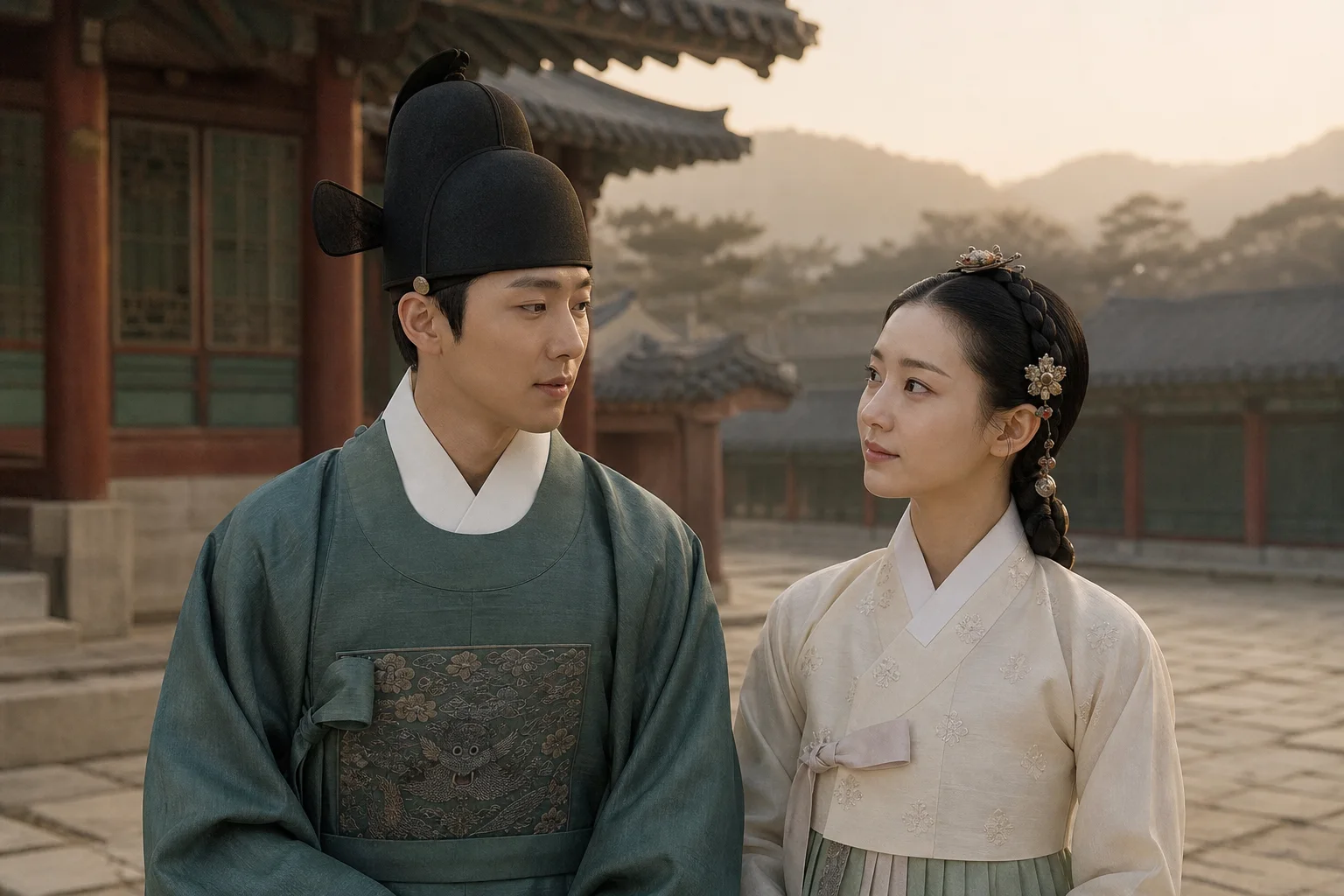
In Korea, 사극 is a scheduling and marketing term before it is a critical one. Broadcasters use it in programme listings, casting notices and press releases so that an audience knows what register to expect: period costume, older speech levels, a world with a court in it somewhere.
English coverage usually renders it as “historical drama” or “period drama.” Those are close, but 사극 carries a stronger implication that recognisable Korean history is in the frame — a dynasty, a documented office, a real war — rather than simply an old-fashioned setting. The label also covers film and stage work, not only television.
The three labels Korean viewers argue over
정통사극 (jeongtong sageuk), literally “orthodox sageuk,” describes work anchored to documented reigns, wars and factional politics. The 1980s KBS cycle known in English as 500 Years of Joseon is the standard example, built with reference to official historical records. Even orthodox sageuk invents, though: records are silent about most private conversation, and writers fill those gaps.
퓨전사극 (fusion sageuk) emerged as a distinct commercial category in the 2000s. It keeps a real historical period as the setting while borrowing the pacing and emotional grammar of contemporary trendy drama, and often wire-assisted action, to tell a largely invented story.
팩션 (paekseon, from the English “faction”) and 가상역사 (gasang yeoksa, “imagined history”) are used for work that starts from a documented premise and then runs a deliberately counterfactual line, or that invents a monarch and dynasty outright.
These are not a ranking from honest to dishonest. They describe where a production has put its weight. A drama can use real royal titles and clothing while telling a fictional story; Netflix’s The East Palace uses a Joseon palace setting and builds its mystery around spirits and a curse.
The vocabulary the subtitles throw at you
Sageuk characters are usually addressed by position, not by personal name. 세자 (seja) is the crown prince. 중전 (jungjeon) is the reigning queen. 대비 and 대왕대비 (daebi, daewang-daebi) are the queen dowager and grand queen dowager. 대감 (daegam) marks a senior official. 마마 and 나리 are honorific forms of address attached to those positions.
Two things follow. First, when a character’s on-screen name appears to change, it is often a promotion, a demotion or a change of household standing rather than a subtitling error. Second, there is no settled English equivalent for most of these titles, so two subtitle tracks for the same show can differ. Neither is necessarily wrong.
Which centuries the genre returns to
Joseon dominates, with the Three Kingdoms era and Goryeo appearing regularly. Part of the reason is practical. Joseon is the longest and most heavily documented Korean dynasty, its court chronicles give writers usable incident, its visual grammar is instantly legible to a domestic audience, and standing sets and costume stock already exist. A Goryeo or Three Kingdoms production carries more design cost and more guesswork.
역사왜곡: what the distortion argument is about
역사왜곡 (yeoksa waegok, “historical distortion”) is the phrase Korean viewers use when a sageuk draws organised criticism. The objection is rarely that a drama invented a character. It usually surfaces when a production alters something with live political weight — the moral standing of a documented figure, the depiction of a real atrocity, a claim about national origin — or when invention is presented in the register of record.
Writing for the culture portal 인문360, webtoon creator Go Il-kwon argues that history and sageuk are not the same object, that perfect objectivity is unavailable even to academic historians, and that creative adaptation still needs rigorous research as its base. That is roughly where the mainstream Korean position sits: adaptation is expected, and the argument is about how much load the invention is asked to carry.
Before you press play
Check two things: the period, and the secondary genre. A sageuk can also be a romance, a political thriller, a comedy, an action series or a horror story, and the second label predicts your viewing experience better than the first. Then note whether coverage calls it 정통, 퓨전 or 팩션. If a review or a production note names which figures and events are documented and which belong to the writers, that is the signal you want.